Friday, April 2, 2010

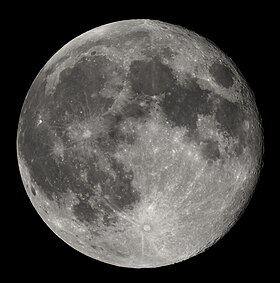
MOON... natural satellite of the Earth.


The Moon is Earth's only natural satellite and the fifth largest satellite in the Solar System. The average centre-to-centre distance from the Earth to the Moon is 384,403 kilometres (238,857 mi), about thirty times the diameter of the Earth. The common centre of mass of the system (the barycentre) is located at about 1,700 kilometres (1,100 mi)—a quarter the Earth's radius—beneath the surface of the Earth. The Moon makes a complete orbit around the Earth every 27.3 (the orbital period), and the periodic variations in the geometry of the Earth–Moon–Sun system are responsible for the phases of the Moon, which repeat every 29.5 (the synodic period).

The Moon's diameter is 3,474 kilometres (2,159 mi), a little more than a quarter of Earth's. Thus, the Moon's surface area is less than a tenth of the Earth (about a quarter of Earth's land area), and its volume is about 2 percent that of Earth. The pull of gravity at its surface is about 17 percent of that at the Earth's surface.

The Moon is the only celestial body on which human beings have made a manned landing. While the Soviet Union's Luna programme was the first to reach the Moon with unmanned spacecraft, the United States' NASA Apollo program achieved the only manned missions to date, beginning with the first manned lunar mission by Apollo 8 in 1968, and six manned lunar landings between 1969 and 1972 – the first being Apollo 11 in 1969. Human exploration of the Moon temporarily ceased with the conclusion of the Apollo program, although a few robotic landers and orbiters have been sent to the Moon since that time. The U.S. had committed to return to the Moon by 2018, however that commitment has been put into jeopardy by the proposed 2011 budget, which will cancel Constellation, NASA's project to send humans back to the moon by 2020. On November 13, 2009, NASA announced the discovery of proof that water exists on the Moon, based on data obtained from its LCROSS lunar impact mission.

Surface geology

The Moon is in synchronous rotation, which means it rotates about its axis in about the same time it takes to orbit the Earth. This results in it nearly always keeping the same face turned towards the Earth. The Moon used to rotate at a faster rate, but early in its history, its rotation slowed and became locked in this orientation as a result of frictional effects associated with tidal deformations caused by the Earth. The side of the Moon that faces Earth is called the near side, and the opposite side the far side. The far side is often inaccurately called the "dark side," but in fact, it is illuminated exactly as often as the near side: once per lunar day, during the new Moon phase we observe on Earth when the near side is dark.


The topography of the Moon has been measured with laser altimetry and stereo image analysis The most visible topographic feature is the giant far side South Pole-Aitken basin, some 2,240 km in diameter, the largest crater on the Moon and one of the largest known craters in the Solar System. At 13 km deep, its floor is the lowest elevation on the Moon. The highest elevations are found just to its north-east, and it has been suggested that this area might represent thick ejecta deposits that were emplaced during an oblique South Pole-Aitken basin impact event. Other large impact basins, such as Imbrium, Serenitatis, Crisium, Smythii, and Orientale, also possess regionally low elevations and elevated rims. The lunar far side is on average about 1.9 km higher than the


Tuesday, March 23, 2010

OFC(optical fibre cable)..


What is Optical fiber?

An optical fiber (or fibre) is a glass or plastic fiber that carries light along its length. Fiber optics is the overlap of applied science and engineering concerned with the design and application of optical fibers. Optical fibers are widely used in fiber-optic communications, which permits transmission over longer distances and at higher data rates (a.k.a "bandwidth") than other forms of communications. Fibers are used instead of metal wires because signals travel along them with less loss, and they are also immune to electromagnetic interference. Fibers are also used for illumination, and are wrapped in bundles so they can be used to carry images, thus allowing viewing in tight spaces. Specially designed fibers are used for a variety of other applications, including sensors and fiber lasers.


Types of Optic Fiber Cables

There are three types of fiber optic cable commonly used: single mode, multimode and plastic optical fiber (POF).

Multimode fiber
Fiber with large (greater than 10 μm) core diameter may be analyzed by geometric optics. Such fiber is called multimode fiber, from the electromagnetic analysis (see below). In a step-index multimode fiber, rays of light are guided along the fiber core by total internal reflection. Rays that meet the core-cladding boundary at a high angle (measured relative to a line normal to the boundary), greater than the critical angle for this boundary, are completely reflected. The critical angle (minimum angle for total internal reflection) is determined by the difference in index of refraction between the core and cladding materials.

Singlemode fiber
Fiber with a core diameter less than about ten times the wavelength of the propagating light cannot be modeled using geometric optics. Instead, it must be analyzed as an electromagnetic structure, by solution of Maxwell's equations as reduced to the electromagnetic wave equation. The electromagnetic analysis may also be required to understand behaviors such as speckle that occur when coherent light propagates in multi-mode fiber. As an optical waveguide, the fiber supports one or more confined transverse modes by which light can propagate along the fiber. Fiber supporting only one mode is called single-mode or mono-mode fiber. The behavior of larger-core multimode fiber can also be modeled using the wave equation, which shows that such fiber supports more than one mode of propagation (hence the name). The results of such modeling of multi-mode fiber approximately agree with the predictions of geometric optics, if the fiber core is large enough to support more than a few modes.

The waveguide analysis shows that the light energy in the fiber is not completely confined in the core. Instead, especially in single-mode fibers, a significant fraction of the energy in the bound mode travels in the cladding as an evanescent wave.

The most common type of single-mode fiber has a core diameter of 8 to 10 μm and is designed for use in the near infrared. The mode structure depends on the wavelength of the light used, so that this fiber actually supports a small number of additional modes at visible wavelengths. Multi-mode fiber, by comparison, is manufactured with core diameters as small as 50 micrometres and as large as hundreds of micrometres. The V number for this fiber should be less than 2.405.


Special-purpose fiber
Some special-purpose optical fiber is constructed with a non-cylindrical core and/or cladding layer, usually with an elliptical or rectangular cross-section. These include polarization-maintaining fiber and fiber designed to suppress whispering gallery mode propagation.

Photonic crystal fiber is made with a regular pattern of index variation (often in the form of cylindrical holes that run along the length of the fiber). Such fiber uses diffraction effects instead of or in addition to total internal reflection, to confine light to the fiber's core. The properties of the fiber can be tailored to a wide variety of applications.


What is Optical Fiber Cable (OFC)

An optical fiber cable is a cable containing one or more optical fibers. The optical fiber elements are typically individually coated with plastic layers and contained in a protective tube suitable for the environment where the cable will be deployed.

In practical fibers, the cladding is usually coated with a tough resin buffer layer, which may be further surrounded by a jacket layer, usually plastic. These layers add strength to the fiber but do not contribute to its optical wave guide properties. Rigid fiber assemblies sometimes put light-absorbing ("dark") glass between the fibers, to prevent light that leaks out of one fiber from entering another. This reduces cross-talk between the fibers, or reduces flare in fiber bundle imaging applications.


Thursday, March 18, 2010

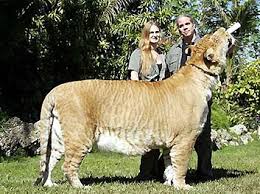
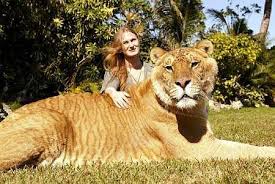
LIGER... WoW!!!!!!.... a large animal...


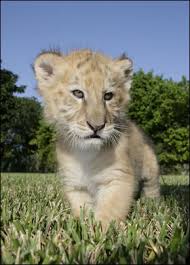
The liger is a big cat born from the breeding of a male lion and a female tiger. This combination produces an offspring with more lionistic features than if the reverse pairing had occurred. That would produce a more tigeristic creature known as a tigon.


Ligers vary in appearance depending on how the genes interact and on which subspecies of lion and tiger are bred together. According to AP Gray in Mammalian Hybrids, the basic colour of lion/tiger hybrids is pale ochre to rust yellow-brown, more intensive than in the lion, but paler than in the tiger and with tiger striping. The mane of the males develops late and is shorter than that of a lion. In general, males grow sparse leonine manes and the facial ruff of a tiger. Males and females have spotted bellies and a striped back. They roar like lions and "chuff" like tigers. The females exhibit conflicting needs for lioness-like sisterhood and tigress-like solitude. Ligers have no scientific name, but Panthera leo X tigris has been posited.


White tigers have been crossed with lions to produce white ligers. Everland Zoo (Yongin Farm Zoo) in Seoul, Korea has produced white ligers, possibly from white tigers and leucistic lionesses. Big Cat Rescue's white tiger apparently co-habitates with a lion, as it was the intention of the original owner to breed white ligers. Golden tigers have been crossed with lions to produce golden ligers. In theory white tigers could be crossed with white lions to produce truly white ligers. White tigons or golden tigons are also possible, but because tigons do not attain the huge size of the liger there is far less interest in breeding them.


A black liger would be an impressive creature, but to breed one would require both a melanistic tiger and a melanistic lion because the gene for black must be inherited from both parents and to guarantee a black liger requires both parents to be black. Very few true melanistic tigers have ever been recorded. Most "black tigers" are due to pseudo-melanism i.e. the markings are so heavy that the tawny background colour is almost hidden. No reports of black lions have ever been substantiated.


In felines, "blue" means a slate-grey colour. Genetically, it is a form of melanism where the colour has been diluted from black to grey. To breed a blue liger would require a blue (i.e.grey) tiger and a black lion (or black tiger and blue lion. Or blue tiger and blue lion). Blue tigers have been recorded in China, but none have occurred in captivity. To date, no grey lions have been recorded.


Interesting facts.,....

Kingdom:Animalia
Phylum:Chordata
Class:Mammalia
Order:Carnivora
Family:Felidae
Genus:Panthera
Scientific Name:Liger
Type:Mammal
Diet:Carnivore
Size:2.8-3.6m (9-12ft)
Weight:400-600kg (882-1,322lbs)
Top Speed:80km/h (50mph)
Life Span:20-26 years
Lifestyle:Solitary
Conservation Status:Endangered
Colour:Tan, Black, Brown, Orange
Skin Type:Fur
Favourite Food:Deer
Habitat:Do not occur in the natural world
Average Litter Size:0
Main Prey:Deer, Birds, Cow
Predators:Human
Special Features:Enormous body size and sharp claws

History of postal system .....


HISTORY

Mail, consisting mostly of government dispatches, was carried from place to place by horse or horse-drawn wagon in ancient Egypt and Persia. Most mail was still being transported the same way in the middle of the 19th century, when stagecoaches carried letters and packages to the West coast.


Ancient and Medieval Service

Historical references to postal systems in Egypt date from about 2000 BC. The Persian Empire under Cyrus the Great (6th century BC) used a system of mounted relay messengers. The riders would stop at regularly placed posthouses to get a fresh horse or to pass on their packets of dispatches to another messenger for the remainder of the distance.

On the other side of the world, in China, a posthouse service had been started early in the Chou Dynasty (ruled 1122-221 BC). It was used mostly to convey official documents. The far-reaching system consisted of relays of couriers who changed horses at relay posts 9 miles (14.5 kilometers) apart. The system was enlarged under the Han Empire (202 BC-AD 220), when the Chinese came in contact with the Romans and their postal system.

The Roman Empire built the most advanced postal delivery system known until that time except for the service in China. Its area was the whole Mediterranean world. Reliable communication from Rome to governors and military officials in faraway provinces was a necessity. Rome met the need by developing the cursus publicus literally, "public course" a state-sponsored series of post roads with relay stations at intervals. The speed with which government dispatches and other mail could be carried about the empire was not equaled again in Europe until the 19th century. Using the relay stations, riders could cover about 170 miles (270 kilometers) in a 24-hour period.

The collapse of the empire in the West did not immediately destroy the postal system. Vestiges of it endured until at least the 9th century before it became fragmented and fell into disuse. In the Eastern, or Byzantine, Empire the system lasted longer because it was eventually absorbed into the Islamic kingdom based in Baghdad.


Reemergence of Postal Services

With the growth of international commerce during the Renaissance, there was a need for business correspondence. Corporations and guilds set up their own messenger services. The great merchant and banking houses of the Italian city-states provided the most extensive and dependable postal service of the time. By the 13th century links were maintained between the commercial centers of Florence, Genoa, and Siena and several communities in northern France that held annual fairs. These fairs attracted merchants from all parts of Europe. The postal service to France thus provided a major international link for commerce and news. There was also a postal link between Venice and Constantinople, the Muslim capital. Russia too shared in the postal communications of the day.

The private postal systems created during the later Middle Ages carried personal mail as well as commercial correspondence. The invention of the printing press late in the 15th century increased the amount of mail and made letter carrying a profitable enterprise. Private postal services emerged to carry mail to all parts of Europe.

The best-known and most extensive such service was the Thurn and Taxis system. A family, whose Italian name was Tassis, had started operating courier services in the city-states from about 1290. Franz von Taxis served as postmaster for the Holy Roman emperor Maximilian I, beginning in 1489. He obtained the right to carry government as well as private mail throughout the empire. Under a patent from the emperor, branches of the family operated a network of postal routes in Spain, Germany, Austria, Italy, Hungary, and the Low Countries from 1512 to 1867. The system employed about 20,000 messengers to deliver mail and newspapers. The Prussian state nationalized the service in 1867.

By this time strong nation-states had emerged in Europe, and the need for private postal services was passing. In any case, governments were beginning to insist on controlling mail service. In France Louis XI had set up the Royal Postal Service in 1477. In 1516 Henry VIII of England appointed a master of the posts to maintain regular service along the roads leading out of London. Neither of these government systems was intended to serve the public. Carrying private mail was not legalized in France until 1627 or in Britain until 1635. Private mail delivery operations functioned side by side with government services for a while. Then in 1672 France declared all postal services to be a state monopoly. Private services were eventually forced out of business or purchased.

Private carriers did not give up, however. Some of them found a way to stay in business by introducing a new public service the collection and delivery of mail within cities. William Dockwra opened a Penny Post in London in 1680. The novelty of his operation lay in prepayment for sending letters and in stamping them to show when and where they were sent for delivery. Dockwra was so successful that he was prosecuted for infringing on the state monopoly. His enterprise was shut down in 1682 and quickly reopened as a government agency. It was nearly 100 years before a similar city service was started in Paris, and it too was rapidly taken over by the government.

The economic growth in Britain during the 18th century spurred a demand for better mail services. New post roads were built, beginning about 1765. Stagecoaches began carrying mail between cities and towns in 1784. The first route was between London and Bath. Mounted postboys also rode on the main routes. Next-day mail delivery became possible in towns throughout a good part of England by the 1830s.


Beginnings of Modern Postal Service

Between 1775 and 1815 Britain was at war almost constantly, either with the United States or with France. To help finance the wars postage rates were increased, and the higher rates remained in force for 25 years after the defeat of Napoleon in 1815. Spurred by popular discontent over postal rates, the English educator and tax reformer Rowland Hill formulated proposals on reforming the postal system between 1835 and 1837. His pamphlet, "Post Office Reform: Its Importance and Practicability," is now regarded as a milestone in the development of the modern postal system.

Hill proved that carrying charges were an insignificant factor in the total cost of handling mail. He further proved that the complex series of rates based on distance were needless. Most of the total cost came from administrative expenses. He also noted that the collection of payment for mail on delivery could be avoided. His solution to postal problems was simple a uniform rate of postage regardless of distance and prepayment of postage through the use of adhesive stamps sold by the post office. He proposed that payments be based on weight and suggested a penny for each half-ounce.

Interesting facts about KIDNEY.......

1.) About one-third of transplanted kidneys come from living relatives and about two-thirds are from someone who recently died.

2.) The kidneys perform their life-sustaining job of filtering and returning to the bloodstream about 200 quarts of fluid every 24 hours. About two quarts are removed from the body in the form of urine, and about 198 quarts are recovered. The urine we excrete has been stored in the bladder for anywhere from 1 to 8 hours.

3.) Your kidneys receive about 120 pints of blood per hour.

4.) Over 400 gallons of recycled blood is pumped through your kidneys every day.

5.) Half of one kidney could do the work that two kidneys
usually do.

6.) Your kidneys represent about 0.5% of the total weight of the body, but receive 20–25% of the total arterial blood pumped by the heart.


7.) Each kidney contains from one to two million nephrons.

8.) Over 1.5 million individuals around the world receive dialysis or have had a kidney transplant.

9.) More than 500 million persons worldwide - 10% of the adult population - have some form of kidney damage, and every year millions die prematurely of cardiovascular diseases linked to Chronic Kidney Disease.

10.) A single kidney with only 75 percent of its functional capacity can sustain life very well. If only one kidney is present, that kidney can adjust to filter as much as two kidneys would normally. In such a situation, the nephrons compensate individually by increasing in size--a process known as hypertrophy--to handle the extra load.

11.) If one functional kidney is missing from birth, the other kidney can grow to reach a size similar to the combined weight of two kidneys (about one pound).

12.) After 40 the kidney nephrons stop functioning at a rate of 1 percent per year. The remaining nephrons tend to enlarge and fully compensate for this demise.

13.) Placed end to end, the nephrons of one kidney would stretch about 8 km that equals nearly 5 miles.

14.) In 1933 Russian surgeon Yuri Voronoy performed the first human kidney transplant in Kiev, Ukraine, it failed.

15.) In December 1954, Dr.Joseph E. Murray performed the world's first successful kidney transplant between identical twins at the Peter Bent Brigham Hospital in Boston, Massachusetts.

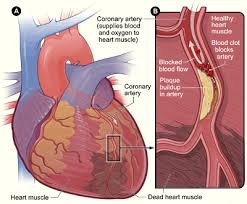
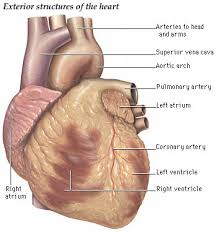
HEArt... keep it good n know about it.....:)


<>.Women hearts beat faster than men.


<>.The human heart can create enough pressure that it could squirt blood at a distance of thirty feet.


<>.The first open heart surgery was performed by Dr. Daniel Hall Williams in 1893.


<>.The human heart beat roughly 35 million times a year.


<>.In 1967, the first successful heart transplant was performed in Cape Town, South Africa.


<>.Your system of blood vessels - arteries, veins and capillaries - is over 60,000 miles long. That's long enough to go around the world more than twice!


<>.Blood takes about 20 seconds to circulate throughout the entire vascular system.


<>.The adult heart pumps about 5 quarts of blood each minute - approximately 2,000 gallons of blood each day - throughout the body.


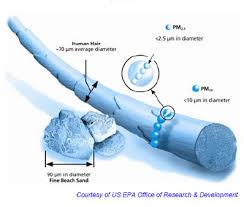
<>.The aorta, the largest artery in the body, is almost the diameter of a garden hose. Capillaries, on the other hand, are so small that it takes ten of them to equal the thickness of a human hair.


<>.An adult woman's heart weighs about 8 ounces, a man's about 10 ounces


<>.Scientists have discovered that the longer the ring finger is in boys the less chance they have of having a heart attack.


<>.Your body has about 5.6 liters (6 quarts) of blood. This 5.6 liters of blood circulates through the body three times every minute. In one day, the blood travels a total of 19,000 km (12,000 miles)-- that's four times the distance across the US from coast to coast.


<>.Blood is about 78 percent water.

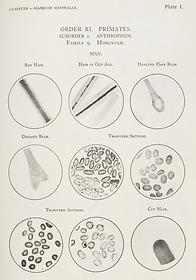
HAirs...... the fact you should know....


  • Average number of hairs on the head: 100,000
  • Red hair: 90,000
  • Black hair: 110,000
  • Blond hair: 140,000
  • Maximum length of hair: 70 to 90 cm
  • Annual growth: 12 cm
  • Female hair grows more slowly than male hair (wouldn’t you just know it)
  • Male hair is more dense than female hair (ditto)
  • Lifespan of hair: 2 to 7 years
  • Diameter of hair: 0.1 mm
  • Load-carrying capacity: 100 grams (= one chocolate bar)
  • Humidity stretches the hair
  • Combing is less detrimental than brushing
  • Correct shampooing will not dry out the hair
  • Frequent washing does not increase loss of hair
  • Hair grows faster in warm weather
  • Elderly people have slower hair growth and diminished hair density
  • Cutting hair does not influence its growth
  • Spliced ends can not be repaired and need to be cut
  • Wet hair should not be rubbed since hair is very sensitive

The average person has up to 150,000 hairs on her or his head.
A single strand can support 100 grams in weight. That means, a whole head of hair could (in theory) support the weight of two elephants.
African hair grows more slowly and is more fragile than European hair.
Asian hair grows the fastest and has the greatest elasticity.
Africans and Europeans are more prone than Asians to balding.
There is one thing about you that your hair cannot reveal: Your gender.


<>.On average, a man spends about five months of his life shaving.

<>.On average, a hair strand's life span is five and a half years.

<>.On average redheads have 90,000 hairs. People with black hair have about 110,000 hairs.

<>.Next to bone marrow, hair is the fastest growing tissue in the human body.

<>.In a lifetime, an average man will shave 20,000 times.

<>.Humans have about the same number of hair follicles as a chimpanzee has.

<>.Hair will fall out faster on a person that is on a crash diet.

<>.The average human head weighs about eight pounds.

<>.The reason why some people get a cowlick is because the growth of their hair is in a spiral pattern, which causes the hair to either stand straight up, or goes to a certain angle.

<>.The reason why hair turns gray as we age is because the pigment cells in the hair follicle start to die, which is responsible for producing "melanin" which gives the hair colour.

<>.The longest human beard on record is 17.5 feet, held by Hans N. Langseth who was born in Norway in 1846.